Is this version the real thing, or just another copy?
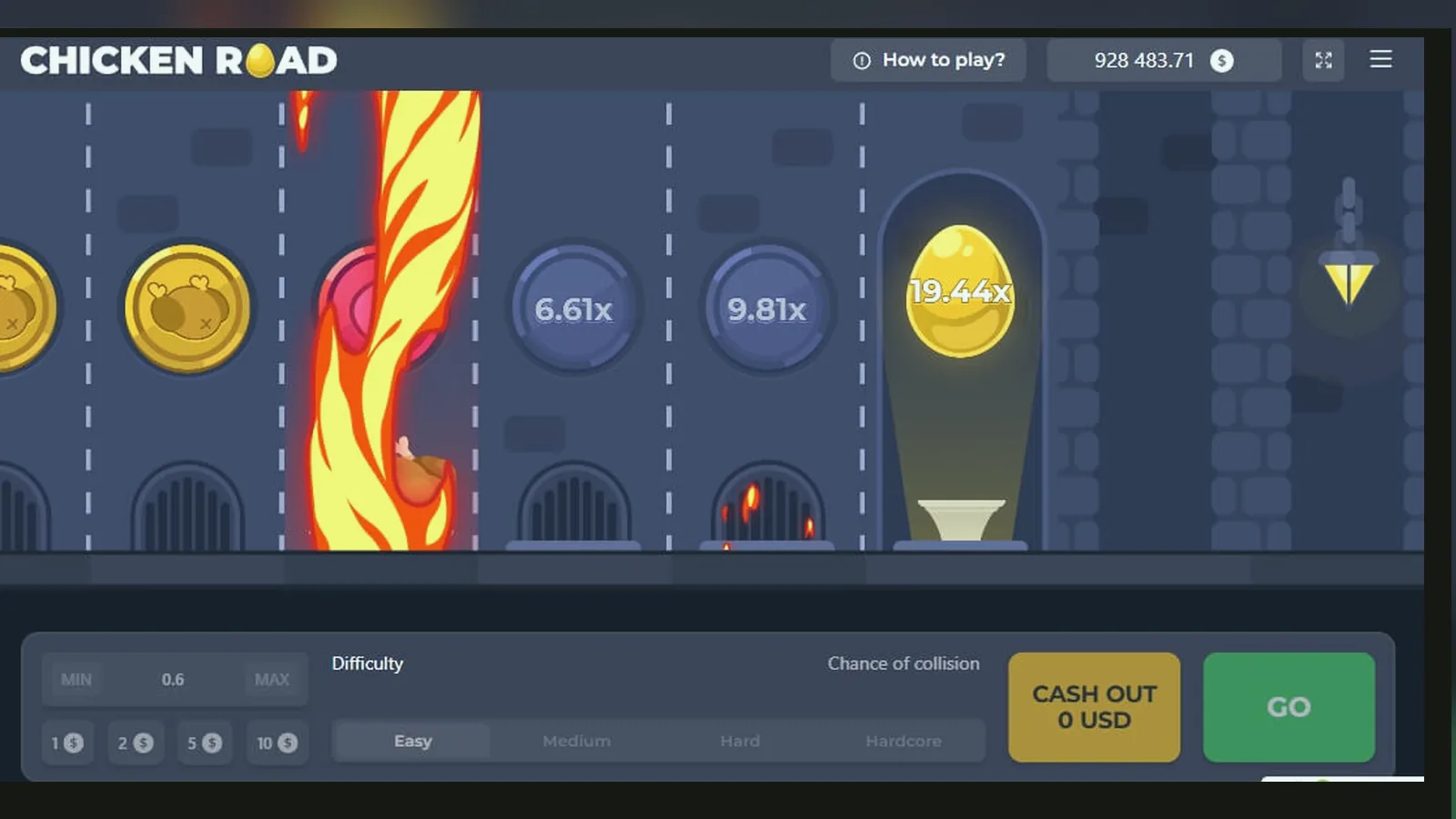
Two versions sit side by side in a browser tab. Both call themselves Chicken Road 2. One is the original crash game, certified and tracked in public registers. The other is a reskin with different maths, no audit trail, and a payout structure that doesn't match what the label says.
If you're playing from the United Kingdom, the difference matters. A UKGC-licensed site will only host the original, because the regulator checks the game certificates before the operator goes live. An unlicensed site can run anything. This page walks through the facts: who built Chicken Road 2, what the tech sheet actually says, how a round works step by step, and a ten-second check that confirms you're on the real version.
Who made it, and where the audit trail sits
The original Chicken Road 2 comes from a studio that submitted the game for third-party certification before release. That certification process tests the random number generator, checks the stated RTP against the actual payout logic, and confirms that the maximum win and volatility figures in the tech sheet match what the code does. The certificate number appears in the game's loading screen and in the operator's game library metadata.
Every UKGC-licensed operator must list its remote gambling licence number in the footer, and that licence ties back to a public register entry on the Commission's site. The register shows which games the operator is approved to offer, and each game links to its certification. If the game isn't in the register, or the certificate doesn't match, the operator isn't allowed to host it here.
Clones skip this process. A clone developer takes the visual design, rebuilds the game logic, and changes the RTP or max-win cap to suit a different business model. The clone has no certificate, and unlicensed sites that host clones don't appear in the UKGC register. For a British player, that means no GAMSTOP protection, no affordability checks, and no legal route to dispute a payout if something goes wrong.
How a round actually works, from your seat
You pick a stake—subject to the £5 cap per round, or £2 if you're aged 18 to 24—and place it before the grid appears. The game draws a 5×5 grid of tiles. Some tiles are safe; some are traps. You don't know which is which until you click. Your job is to pick a path from the bottom row to the top without hitting a trap.
Each safe tile you reveal adds a multiplier to your stake. The multiplier rises as you climb, but so does the risk: fewer safe tiles remain, and the chance of hitting a trap increases. You can cash out after any safe tile, locking in the current multiplier. If you hit a trap, the round ends and the stake is gone.
The difficulty setting changes the ratio of safe tiles to traps. Easy mode might give you three safe tiles per row; hard mode might give you one. The RTP stays constant across difficulty levels, because the payout multipliers adjust to match the risk. A harder grid pays more per safe tile to keep the long-term return in line with the stated percentage.
- Set your stake, respecting the caps.
- Pick easy, medium, or hard.
- Click a tile in the bottom row.
- If it's safe, the multiplier rises and you can click the next row or cash out.
- Repeat until you reach the top row or decide to stop.
- Hit a trap, and the round ends.
The RNG picks the trap positions before you see the grid. The order in which you click tiles doesn't change what's underneath; the outcome is already set when the round loads. This is standard for certified crash games, and third-party labs test that the RNG can't be predicted or manipulated.
The real numbers from the tech sheet
The official spec gives the bet range, RTP, maximum win, and volatility. These numbers are binding: the game can't deviate from them without failing re-certification. Here's what the sheet says, converted to GBP and local formatting for this market.
The £5 and £2 stake caps are set by UK law, not by the game. Even if the game allows a £100 stake in another jurisdiction, a UKGC-licensed operator will enforce the lower cap for players here. The 18-to-24 cap of £2 per spin applies to slots; some operators extend it to crash games as a safer-gambling measure, so check the stake entry field before you play.
High volatility means long losing streaks are normal. The RTP of 97.00% is calculated over millions of rounds. In a single session, you might see ten losing rounds in a row, or you might clear four rows on your first try. The maths guarantees the return over time, not over twenty minutes.
Which clones circulate, and how they differ
At least four clones use the Chicken Road 2 name or a close variant. Two change the grid size to 6×6, which alters the probability of reaching the top. One clone drops the RTP to 94%, pocketing the extra 3% as house edge. Another keeps the grid and RTP but caps the max win at 1,000× instead of 10,000×, so high-multiplier outcomes pay less than the original promises.
| Version | Grid | RTP | Max win |
|---|---|---|---|
| Original | 5×5 | 97.00% | 10,000× |
| Clone A | 6×6 | 97.00% | 8,000× |
| Clone B | 5×5 | 94.00% | 10,000× |
| Clone C | 5×5 | 97.00% | 1,000× |
Unlicensed sites don't declare which version they host. The game might load with the original's branding, but the payout logic underneath is different. You won't know until you compare your results to the stated RTP over a long sample, and by then you've already staked real money.
For a British player, the simplest filter is the UKGC register. If the site isn't in it, the game isn't the original. Licensed operators here can't risk hosting a clone, because the Commission audits the game library and checks certificates. If a clone slips through, the operator's licence is at risk.
A ten-second check that you're on the original
- Open the site footer and find the UKGC licence number.
- Search the UKGC public register for that number.
- Check that Chicken Road 2 appears in the operator's approved game list.
- Load the game and look for the certification mark in the game's info panel or loading screen.
If any step fails—no licence number, no register entry, no game in the list, no cert mark—you're not on the original. Close the tab and find a licensed operator. The register is public, searchable, and updated in real time when a licence changes status.
Once you're on a licensed site, the rest follows: age verification before you can deposit, affordability checks starting from £150.00 net deposits a month using credit-reference data, GAMSTOP self-exclusion that blocks every licensed operator if you register, and Faster Payments withdrawals that clear in one to two working days after your first KYC check. Unlicensed sites offer none of that, and your winnings have no legal protection if a dispute arises.
FAQ
Is Chicken Road 2 legal to play in the United Kingdom?
Yes, if the operator holds a valid UKGC remote gambling licence. Check the licence number in the footer against the Commission's public register. Unlicensed sites are illegal to market here, and you have no legal recourse if a payout is withheld.
What's the minimum and maximum I can stake per round?
The game allows £0.10 to £100.00, but UK law caps stakes at £5.00 per spin for most players, and £2.00 if you're aged 18 to 24. The operator enforces the cap, so the stake entry field won't accept a higher amount.
Can I play Chicken Road 2 in demo mode before I deposit?
Most UKGC-licensed sites offer demo play, but you'll need to log in and pass age verification first. The demo uses the same RNG and payout logic as real-money play, so it's a fair test of the game's mechanics and volatility.
How do I know I'm playing the original and not a clone?
Check the UKGC register for the operator's licence, confirm that Chicken Road 2 is in the approved game list, and look for the certification mark in the game's info panel. If any part of that chain is missing, you're on a clone or an unlicensed site.
What happens if I win more than I can afford to withdraw?
Affordability checks start from £150.00 net deposits a month, using credit-reference data at the first stage. If you win a large amount, the operator may ask for proof of income before processing the withdrawal. This is a legal requirement under UKGC rules, not a delay tactic.
Are my winnings taxed in the UK?
No. Gambling winnings are tax-free for the player. Operators pay a 40% Remote Gaming Duty on gross profit, which rose from 21% in April 2026, but that cost doesn't fall on you. What you win is what you keep, minus any wagering requirements on bonus funds.